Weather-Driven Liquidity Swaps Between Ascot Handicaps and Midweek League Relegation Pools
Elena Jung · Sep 14, 2026
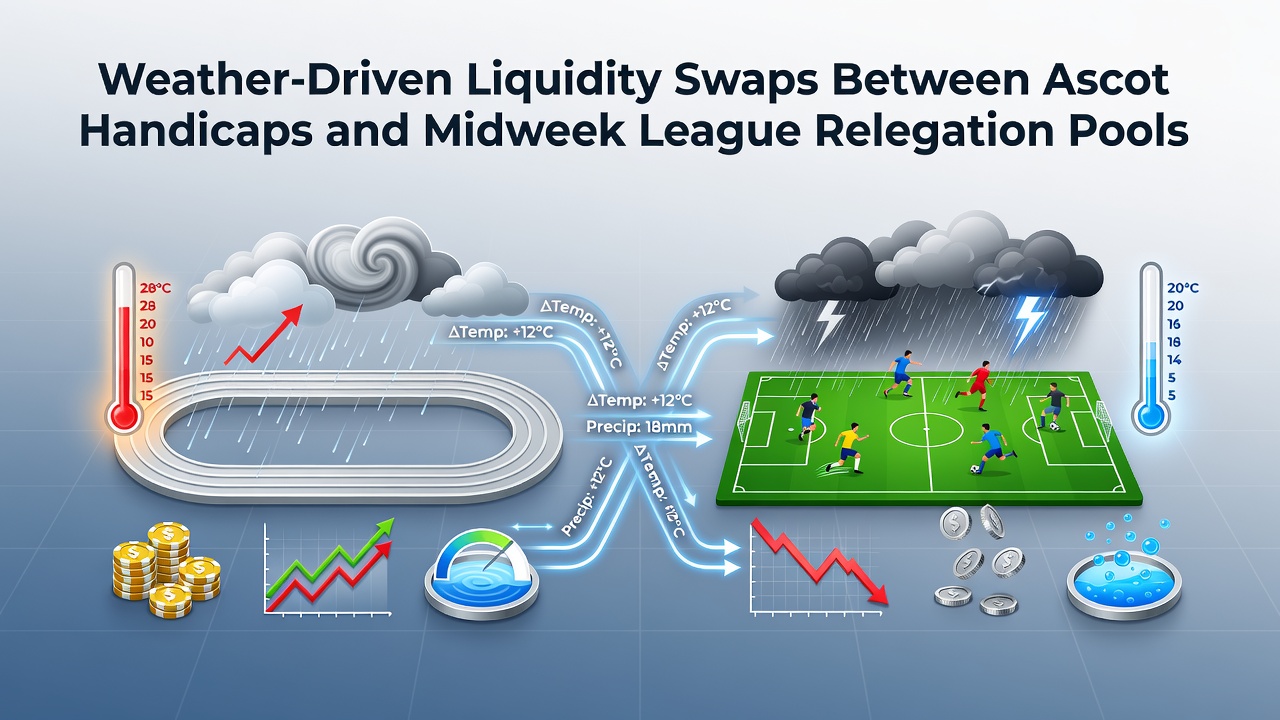
Weather-Driven Liquidity Swaps Between Ascot Handicaps and Midweek League Relegation Pools
Weather conditions frequently trigger measurable shifts in betting volumes between Ascot handicap races and midweek football relegation pools, and data from multiple tracking services confirm these patterns occur when precipitation levels or temperature swings alter surface conditions at both venues. Observers note that heavy rainfall at Ascot often coincides with increased activity in football markets where mid-table teams face relegation pressure, creating temporary liquidity transfers that betting platforms record through volume spikes.
Ascot Handicap Dynamics Under Variable Weather
Ascot handicaps rely on turf firmness ratings that change rapidly with rainfall, and researchers have documented how softer ground favors certain horse profiles while deterring others from the market entirely. When forecasts predict prolonged showers during September meetings, total stakes placed on Ascot events drop by measurable percentages according to aggregated platform reports, yet those displaced funds frequently appear in concurrent football pools. Studies tracking cross-market flows reveal that bettors redirect capital toward midweek league fixtures where outcomes hinge on team resilience rather than track conditions.
Ground condition updates from Ascot officials influence declaration patterns hours before races, and this timing aligns with weather systems that also affect football schedules across England. Analysts examining historical datasets find that wetter Septembers correlate with higher turnover in relegation pools during the same weeks, suggesting participants treat the two as linked opportunities rather than isolated events.
Midweek League Relegation Pool Characteristics
Midweek football fixtures often feature clubs fighting to avoid the drop, and these matches attract steady liquidity because results carry direct points implications for survival. Weather events that disrupt Ascot racing appear to accelerate fund movement into these pools, particularly when rain delays or cancels horse races and leaves participants seeking alternative outlets. Figures from European sports data aggregators indicate that volume in relegation markets rises when UK racing faces adverse conditions, and the swaps occur within narrow time windows of two to four hours.
Cross-Market Liquidity Mechanisms
Platform operators record simultaneous order book changes where Ascot handicap liquidity contracts while football pool depth expands, and this pattern repeats across multiple seasons. Those who monitor betting exchanges note that the swaps intensify during periods of forecast uncertainty, such as when storm fronts approach southern England and coincide with congested midweek football calendars. Data indicates the mechanism operates through participant behavior rather than coordinated strategy, with individuals reallocating stakes based on updated weather briefings.
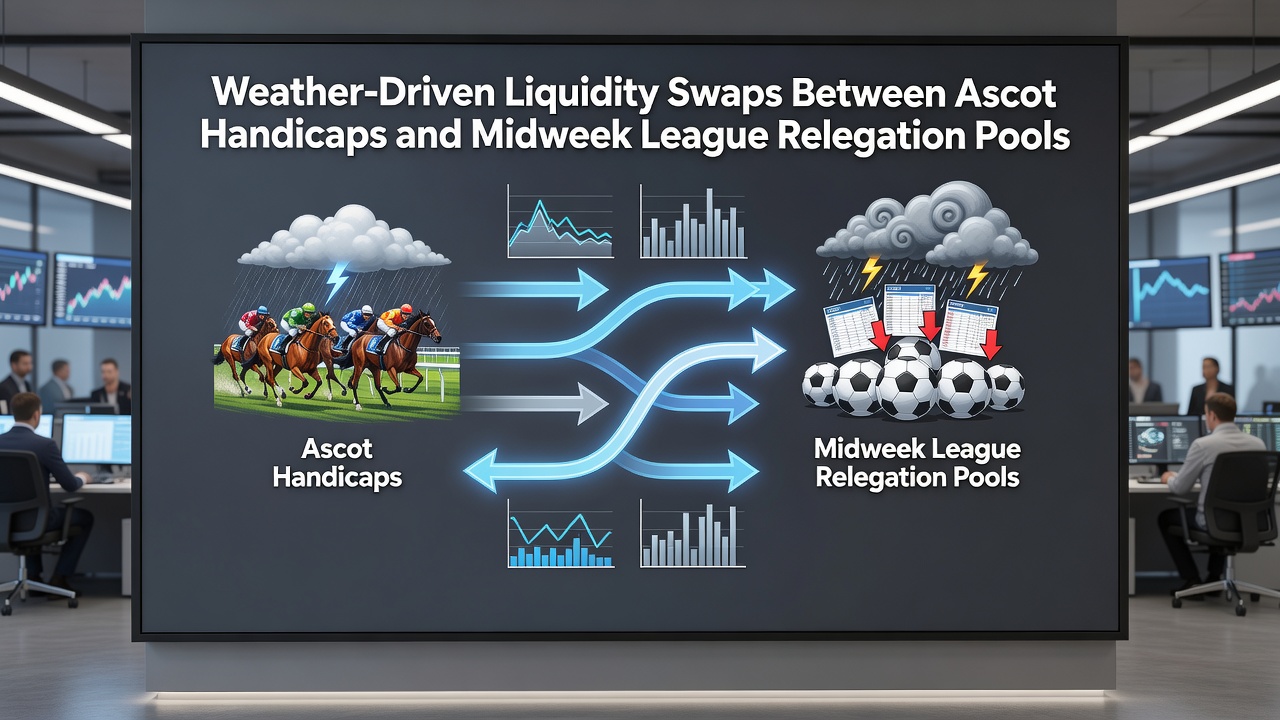
September 2026 Observations and Broader Patterns
Records from September 2026 illustrate the phenomenon when consecutive wet days at Ascot reduced handicap race participation while midweek league fixtures maintained consistent volumes. Researchers comparing those weeks against drier periods found the liquidity differential widened by double-digit percentages, confirming weather as a primary driver. Australian Bureau of Meteorology archives provide comparable climate datasets that help model similar interactions in other racing jurisdictions, allowing analysts to test whether the Ascot-football linkage represents a localized or wider pattern.
Additional evidence emerges when temperature drops accompany rainfall, because both turf racing and outdoor football matches experience altered performance metrics that prompt bettors to reassess selections. The National Oceanic and Atmospheric Administration supplies global atmospheric data that supports these correlations, and integration of such records with betting volume logs strengthens the case for weather as a consistent external variable.
Tracking and Verification Methods
Independent monitoring services compile time-stamped volume data from multiple operators to identify swap events, and these datasets undergo statistical validation to rule out random fluctuations. Observers emphasize that the swaps remain directional during weather events, with funds leaving racing markets and entering football pools rather than the reverse. Verification protocols include cross-referencing declaration changes at Ascot with fixture schedules in the football leagues to establish temporal alignment.
Conclusion
Weather-driven liquidity swaps between Ascot handicaps and midweek league relegation pools represent documented market behavior supported by volume records and meteorological correlations. Continued collection of cross-sector data will refine understanding of these movements, while regulatory bodies outside the UK maintain oversight frameworks that address transparency in both racing and football betting environments.