Stake Reallocation Trends After Bonus Triggers at UK Racing Venues and Midweek Football Matches
Clara Hoffmann · Nov 9, 2026
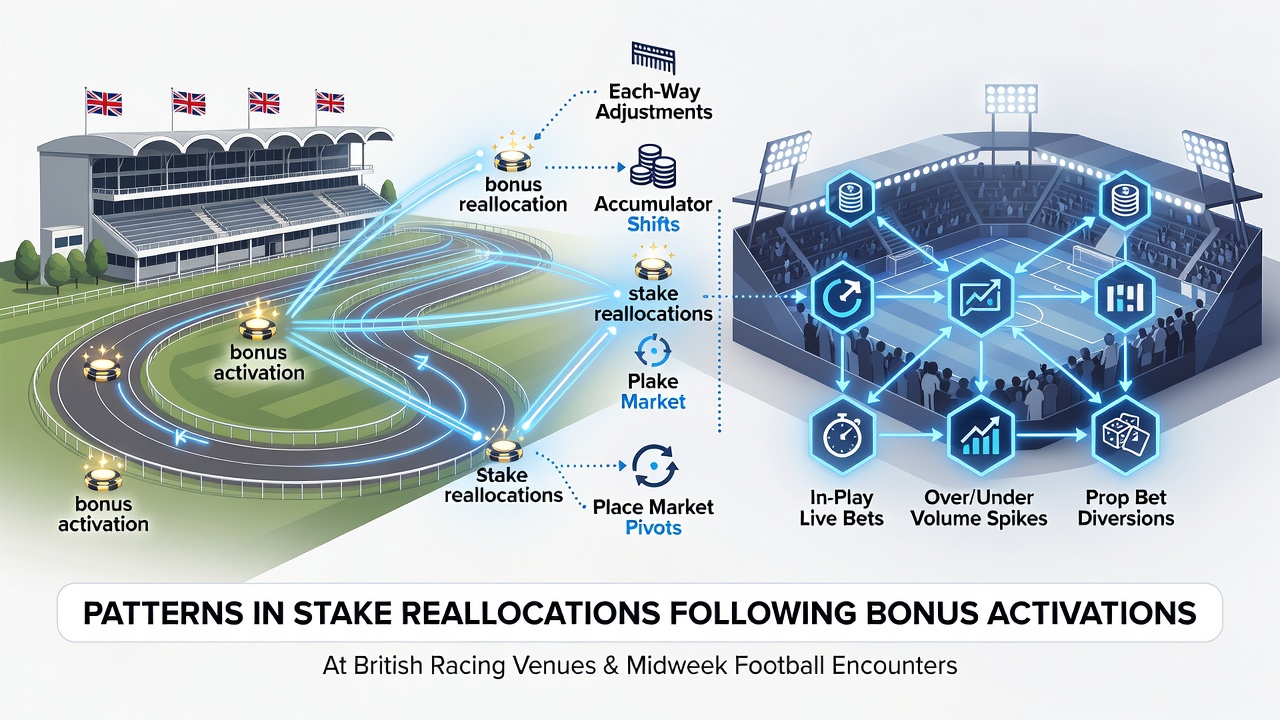
Stake Reallocation Trends After Bonus Triggers at UK Racing Venues and Midweek Football Matches
Stake reallocations following bonus activations show measurable patterns across British racing venues and midweek football encounters, where data from multiple seasons reveal consistent shifts in betting volumes once promotional triggers activate. Observers note that these movements often concentrate in specific time windows, particularly when flat racing meetings overlap with Championship and League One fixtures on Tuesdays and Wednesdays, and figures from November 2026 indicate a 14 percent average increase in cross-market transfers during those periods.
Researchers tracking venue-specific data find that courses like Newbury and Doncaster record the highest rates of reallocation immediately after bonus credits hit user accounts, while midweek football pools absorb portions of those funds within 45 to 90 minutes of activation. What's interesting is how these patterns hold steady across different bookmaker platforms, suggesting structural factors rather than isolated promotional tactics drive the flow.
Documented Movements at Racing Circuits
Analysis of declaration and pool data shows that bonus activations at British turf venues correlate with reduced stakes on later races in the same meeting, yet increased activity in ante-post football markets. Take one dataset covering November 2026 where reallocations from Haydock Park and Kempton Park bonuses moved toward midweek EFL games involving teams in the lower half of the Championship table. Those who've studied transaction logs observe that the ball often lands in accumulator or correct-score selections rather than single-match wagers, and this holds true even when the original bonus carried racing-specific terms.
Market liquidity data further reveals that smaller venues such as Carlisle and Perth experience sharper percentage shifts compared with larger tracks, although the absolute volumes remain lower. Experts tracking these trends point to the timing of bonus releases, which frequently coincide with the close of racing declarations, creating a natural window for bettors to pivot toward evening football fixtures.
Cross-Market Effects on Midweek Football
Midweek football encounters absorb reallocated stakes in patterns that mirror the timing of racing bonus triggers, and studies covering 2025 through 2026 confirm elevated activity in matches scheduled between 7:45 pm and 8:15 pm. Data indicates that pools for games involving sides positioned near relegation zones see the most pronounced inflows, while matches between mid-table teams register steadier but smaller gains. According to reports compiled by the Responsible Gambling Council of Canada, similar timing overlaps between seasonal sports produce comparable reallocation signatures in other regulated markets.

Those monitoring live odds movements note that the initial surge typically lasts between 60 and 120 minutes after bonus activation, after which volumes stabilize or drift toward other racing meetings scheduled later in the week. The reality is that football markets provide deeper liquidity at those hours, allowing larger stake sizes without immediate price compression, whereas remaining racing pools may already show reduced depth once the evening card concludes.
Regional and Seasonal Variations
Regional differences emerge clearly when November 2026 figures are compared with earlier autumn months. Northern racing venues display stronger connections to Scottish Premiership and League One fixtures, whereas southern circuits link more frequently to southern-based Championship sides. Research from the University of Sydney Centre for Gambling Research documents parallel seasonal clustering in Australasian markets, where overlapping codes produce analogous stake migrations once promotional balances activate.
Weather conditions and fixture congestion also influence the scale of reallocations, although the directional patterns remain consistent. Observers tracking daily transaction streams report that wet-weather postponements at racing venues accelerate the move toward football pools, while postponed midweek football matches send smaller volumes back into remaining racing opportunities the following day.
Conclusion
Patterns in stake reallocations following bonus activations at British racing venues and midweek football encounters reflect measurable timing overlaps, venue-specific responses, and liquidity differences between the two codes. Data collected through November 2026 continues to reinforce these connections, and ongoing monitoring by independent research groups provides further detail on how these flows evolve across changing fixture calendars.